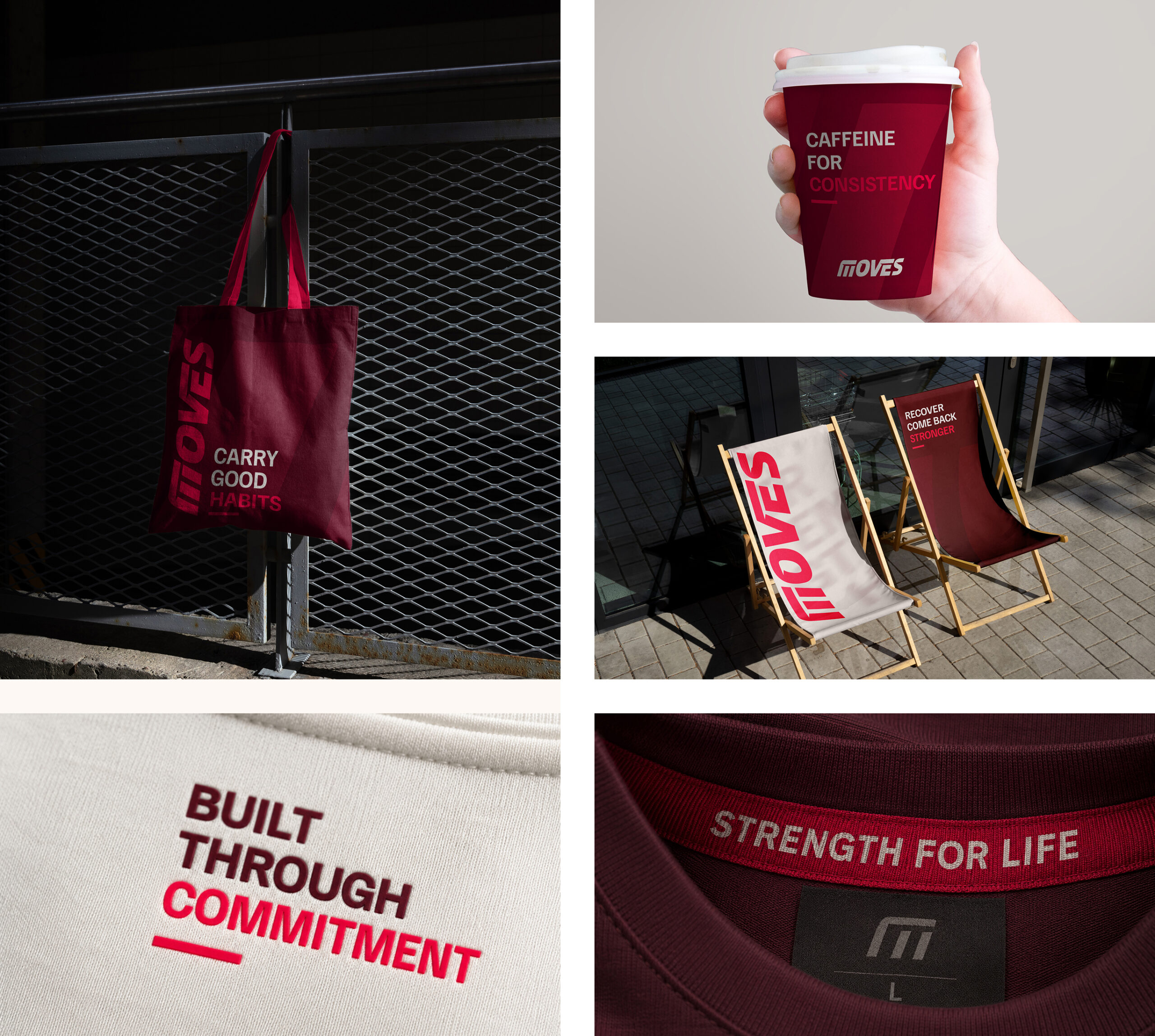
Repositioning for the next generation of fitness
Moves
Strategy
Identity
Experience
Challenge
Moves had built a strong reputation over more than ten years, but the fitness landscape had changed dramatically. Traditional gyms were no longer competing solely with each other. Boutique studios, digital fitness platforms and lifestyle brands had reshaped customer expectations, creating a far more competitive market.
Rather than refreshing the visual identity, the ambition was to redefine the brand from the inside out. The objective was to develop a future-proof strategy that would clarify what Moves stands for, strengthen its market position and create a consistent experience across every customer touchpoint.
Design
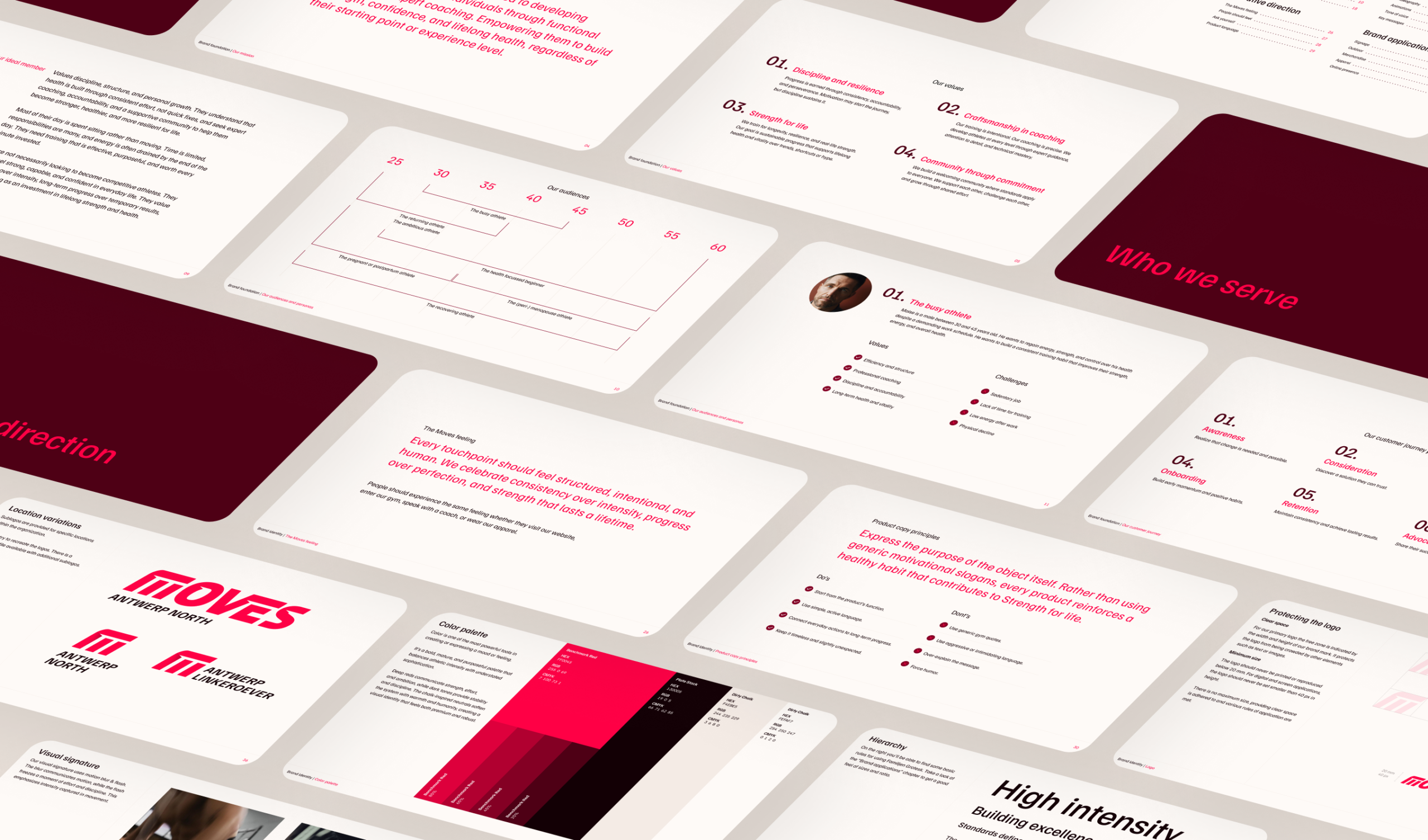
Every successful brand starts with a clear strategy. We began by analysing the evolving fitness landscape, identifying both traditional competitors and emerging challengers. This competitive analysis revealed new market dynamics, shifting customer expectations and opportunities for differentiation.
Together with key stakeholders, we redefined the strategic foundation of the brand by establishing its positioning, purpose, values and personality. Rather than trying to compete on price or facilities alone, Moves positioned itself around creating a motivating, accessible and personal fitness experience. This strategic framework became the foundation for every creative and business decision that followed.
A modern fitness brand serves people with different lifestyles, motivations and goals. Instead of approaching every member in the same way, we identified the key audience segments and developed detailed personas that represented their behaviours, expectations and challenges.
These insights extended beyond marketing. They became the starting point for designing a more personalised customer experience and identifying opportunities for new products and services. Examples included:
• Curated supplement packs.
• Grab-and-go healthy meals for busy professionals.
• Personalised communication based on member profiles.
• Service offerings adapted to different fitness goals.
By aligning the brand strategy with customer needs, Moves could evolve from offering memberships to delivering a more complete fitness experience.
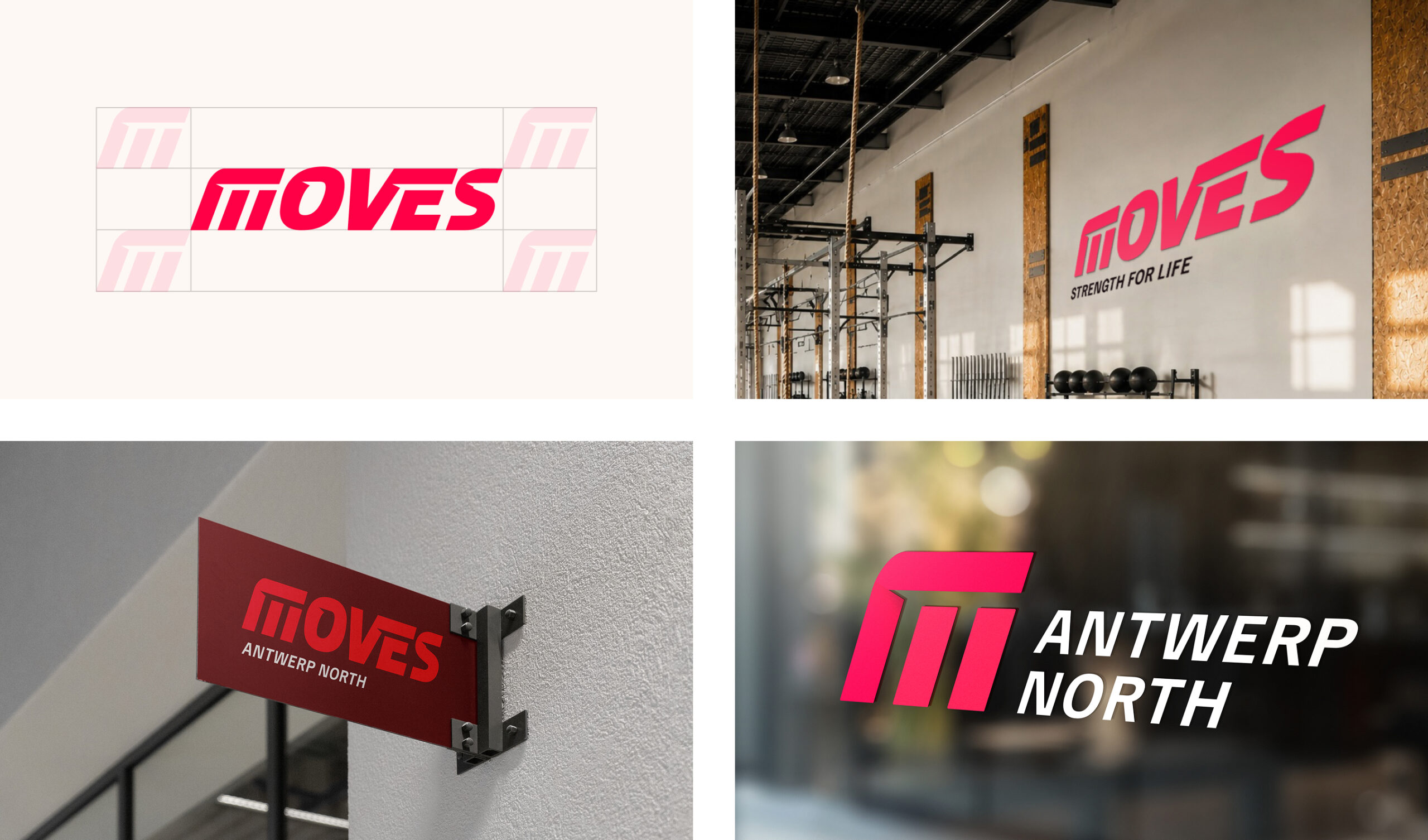
With the strategic foundation established, the next step was translating the brand into a cohesive creative direction. The goal wasn’t to create a trend-driven identity, but a flexible visual language capable of supporting the brand for years to come. Every creative decision was evaluated against the strategic positioning to ensure consistency between what the brand says and how it looks.
Rather than prescribing individual designs, these guidelines created a scalable framework that could evolve alongside the business while maintaining a recognisable identity across every touchpoint.
The creative direction also shaped a campaign platform that turns Moves’ commitment to intentional coaching into a simple idea: Nothing Random.
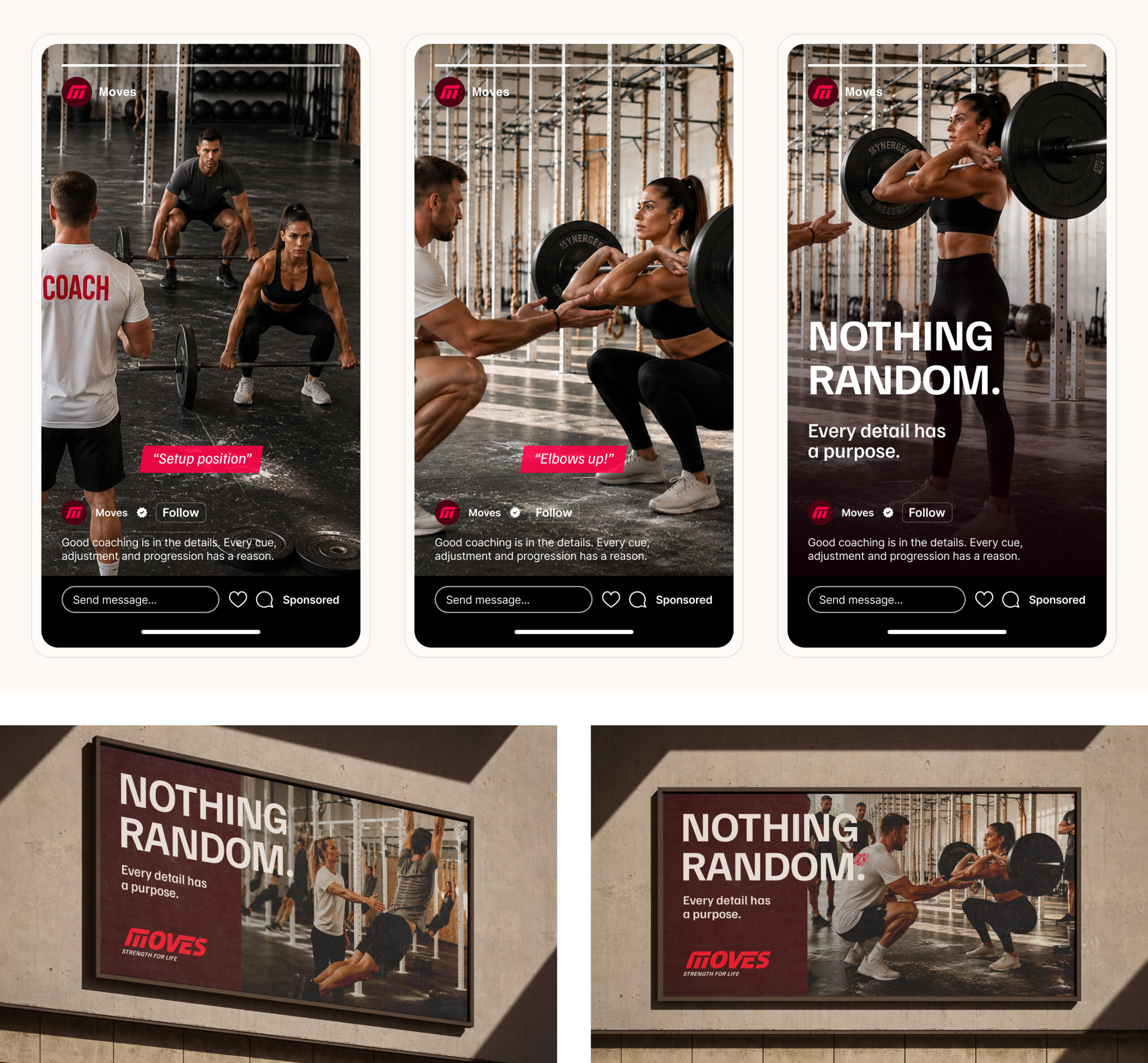
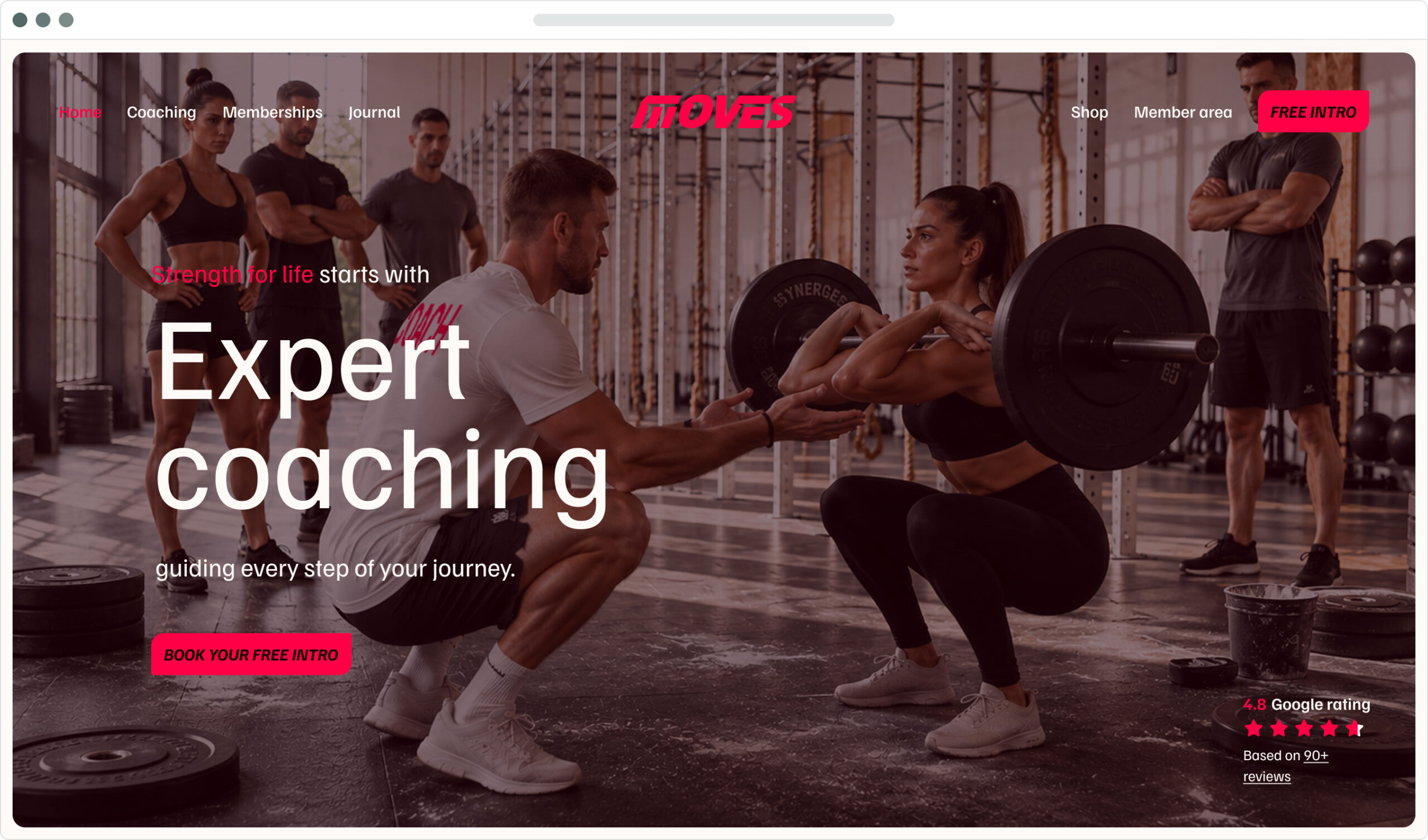
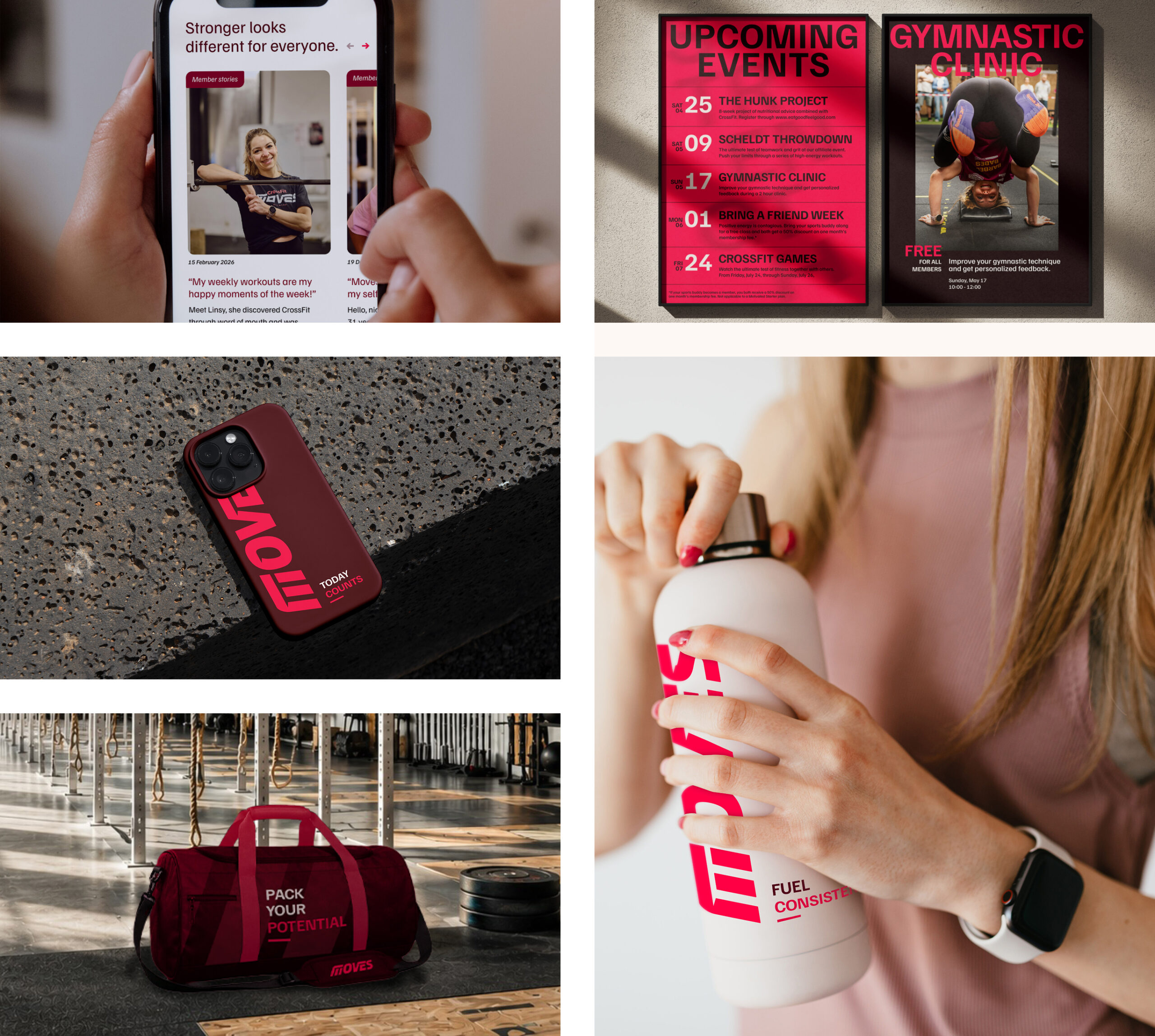
Once the creative direction was defined, it was translated into a complete ecosystem of physical and digital brand experiences. Every application reinforced the same strategic positioning, creating consistency regardless of where members encountered the brand.
Applications included brand identity, website & digital experience, social media, marketing campaigns, club signage, merchandise, print materials, internal communication, and promotional assets. The result was a coherent brand system capable of supporting future campaigns, product launches and business growth.
Results
The rebranding transformed Moves from a traditional fitness centre into a contemporary lifestyle brand with a clear strategic position. By aligning brand strategy, customer experience and creative direction, the project established a scalable foundation for future growth. The new positioning enabled Moves to communicate more consistently, better address the needs of different customer segments and expand its offering beyond traditional fitness services.
More importantly, the project demonstrated how strategic thinking can drive both brand perception and business innovation. Rather than being limited to a new visual identity, the rebranding became a framework for shaping future products, services and customer experiences.